




The Potential of a Mature Individual: How Objectively Do We Assess Our Own Capabilities?
The Potential of a Mature Individual: How Objectively Do We Assess Our Capabilities?
The question of potential becomes particularly relevant in adulthood. Unlike childhood, where development is measured through external criteria—grades, parental expectations, and teachers’ evaluations—adults are often left alone with their own perceptions of what they are capable of. When making decisions about career, relationships, goals, and boundaries, we rely not only on our actual skills but also on our internal self-image. This gives rise to a central question: how objective is that image?
In practice, a paradoxical pattern emerges. Some people, despite possessing significant abilities, spend years doubting themselves and avoiding opportunities. Others, with more limited resources, act confidently and achieve noticeable results. This difference is rarely explained by intelligence or experience alone. More often, it is rooted in how a person perceives their own potential.
The Real and the Ideal Self: A Source of Distorted Self-Assessment
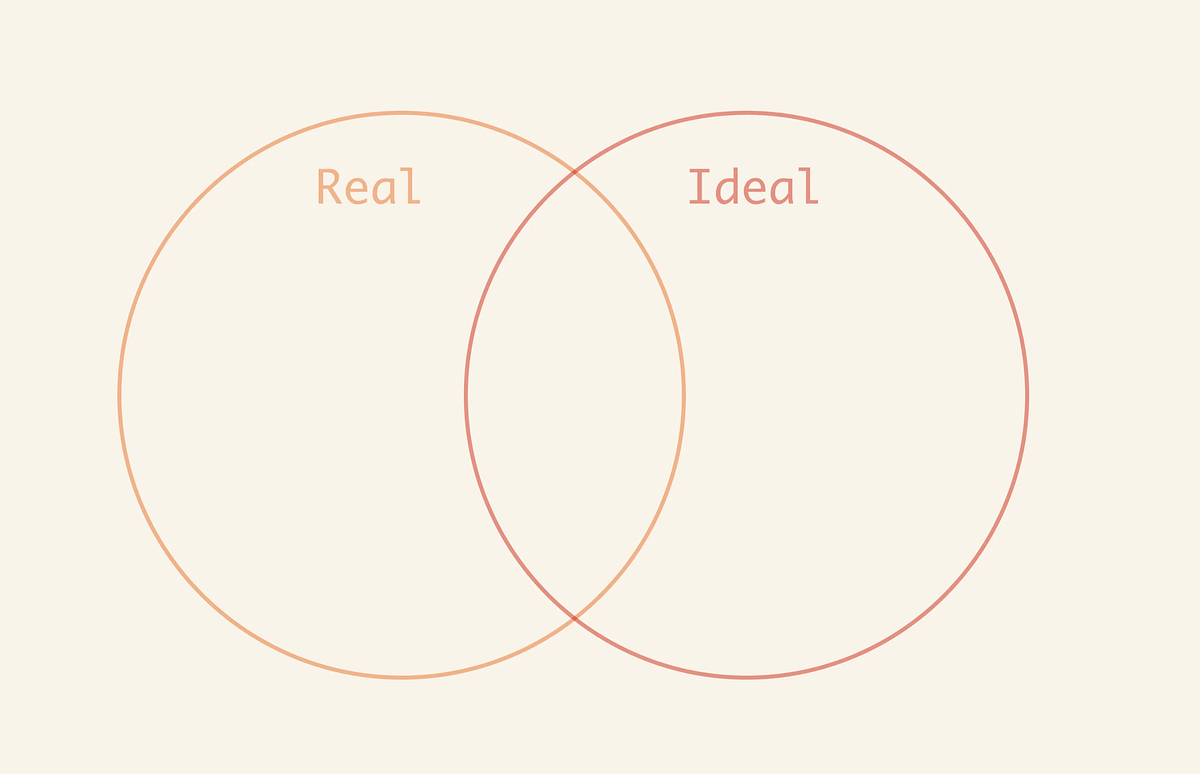
One of the most influential frameworks for understanding subjectivity in evaluating potential comes from the theory of Carl Rogers. Within humanistic psychology, he distinguished between the Real Self (who a person actually is) and the Ideal Self (who a person believes they should be).
Problems arise when a persistent gap develops between these two images. The greater the discrepancy between lived experience and an idealized self-concept, the higher the internal tension—and the further self-assessment drifts from objectivity. Even when a mature individual possesses the necessary skills, knowledge, and opportunities, failing to meet their internal ideal may lead them to perceive themselves as “not good enough.”
It is important to note that the Ideal Self rarely forms independently. It is shaped by social expectations, cultural norms, comparisons with others, and early experiences of approval—or its absence. As a result, people often assess their potential not by their actual capabilities, but by how closely they match an imposed standard.
What Shapes the Ideal Self?
The ideal image does not emerge in a vacuum. It is influenced by parental expectations, educational environments, societal ideas about success, and a persistent tendency to compare oneself with others. In adulthood, this is further reinforced by an “achievement culture,” where outcomes are valued over processes and potential is often equated with visible success.
Under such conditions, individuals either strive endlessly toward an unattainable standard or, conversely, abandon attempts altogether, concluding in advance that they are “not that kind of person.” In both cases, objectively assessing one’s capabilities becomes increasingly difficult.
Potential and Motivation: The Role of Needs
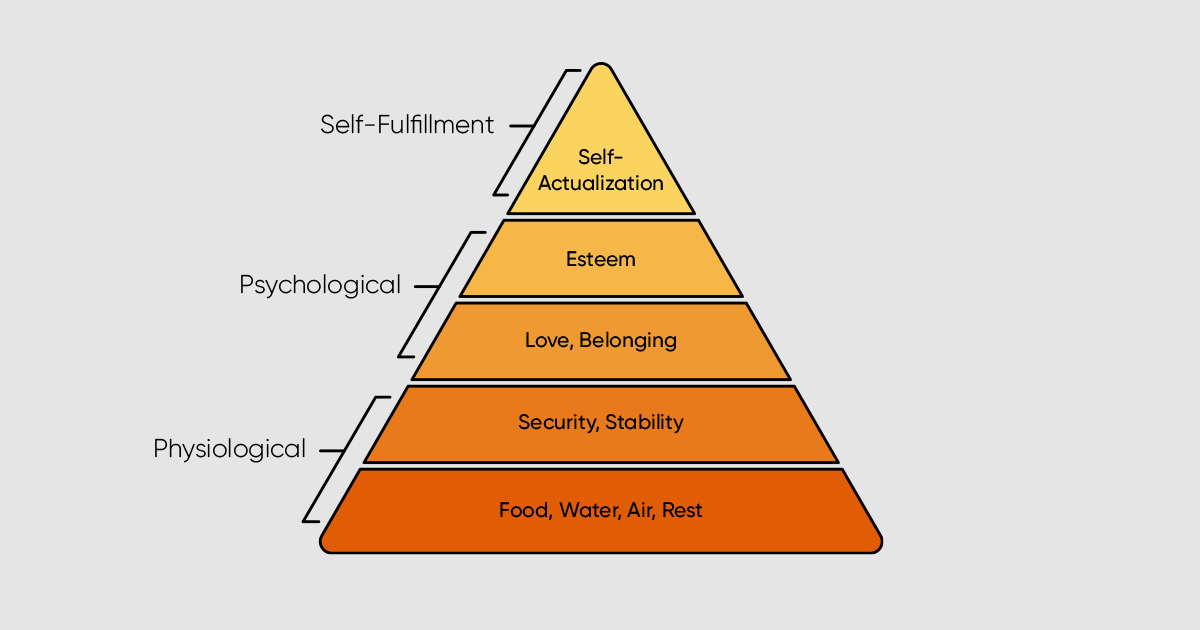
Any discussion of realizing potential inevitably involves motivation. In this context, Abraham Maslow’s model remains highly relevant. According to his theory, growth and self-actualization become possible only after basic needs—such as safety, stability, and belonging—are met.
This means a person may be capable, yet lack the conditions necessary to realize those abilities. A shortage of resources, chronic stress, or an unstable environment can distort the perception of potential: opportunities exist, but appear inaccessible. In such cases, the issue is not a lack of ability, but a mismatch between internal resources and external conditions.
Why Confidence Is Not the Same as Potential
One of the most well-known effects illustrating distorted self-evaluation is the Dunning–Kruger effect. Research by psychologists David Dunning and Justin Kruger demonstrated that individuals with low levels of competence tend to overestimate their abilities, while more skilled individuals often underestimate themselves.
This effect is crucial because it clearly shows that confidence is not a reliable indicator of potential. Low competence may be accompanied by high self-assurance, while high potential may coexist with doubt and caution. As a result, in social reality, it is often not those with the greatest capabilities who stand out, but those who are ready to act without strong internal resistance.
Why Do Highly Capable Individuals Doubt Themselves?
Self-doubt in capable adults is often linked not to a lack of skills, but to internal psychological mechanisms. Perfectionism, fear of mistakes, a strong inner critic, and a significant gap between the Real and Ideal Self can lead individuals to undervalue their abilities and avoid activities in which they could succeed.
In such cases, potential remains unrealized not because it is absent, but because subjective evaluation blocks action.
Self-Assessment and Real Achievement: The Expectancy Effect
Another important mechanism is the self-fulfilling prophecy, also known as the Pygmalion effect. Research in education has shown that both others’ expectations and a person’s own expectations can significantly influence real outcomes.
When individuals believe in their abilities and expect success, they are more likely to take action, tolerate difficulties, and seize opportunities. In the absence of such belief, even high potential may fail to translate into achievement. This does not mean that “confidence alone solves everything,” but it highlights the role of subjective attitudes in realizing objective capabilities.
Is It Possible to Assess Our Potential Objectively?
In adulthood, completely objective self-assessment is almost unattainable. Emotional experiences, past failures, social comparisons, and expectations inevitably distort self-perception. However, partial objectivity becomes possible when individuals rely not only on internal feelings, but also on real actions, feedback, and observations of how they cope with tasks in different contexts.
It is important to understand that potential is not a fixed quantity or a definitive “ceiling” of abilities. It is a range that can expand or contract depending on environment, motivation, and readiness to act.
One Technique for Working with the Real and Ideal Self
One simple yet effective technique helps individuals recognize the gap between who they imagine themselves to be and who they are in reality. First, the person describes their ideal self: how they “should” be, what they should be capable of, and what outcomes they should achieve. At this stage, it often becomes apparent that the ideal image is shaped less by inner potential and more by inflated demands or expectations imposed by the environment.
Next, attention shifts to the Real Self: existing skills, experience, limitations, and actual achievements. Comparing these two images allows individuals not to judge themselves, but to better understand where expectations exceed reality—or where existing potential has been overlooked. This process helps reduce internal tension and brings self-assessment into a more grounded and realistic perspective.
Conclusion
The potential of a mature individual is rarely defined by abilities alone. More often, a decisive role is played by subjective self-perceptions, levels of motivation, and the internal permission to act without waiting for perfect alignment with an ideal image.
We frequently judge our capabilities not by what we can actually do, but by who we believe we should be. Recognizing this gap does not provide immediate answers, but it allows us to view potential not as an abstract maximum, but as a real opportunity for growth within concrete conditions.