


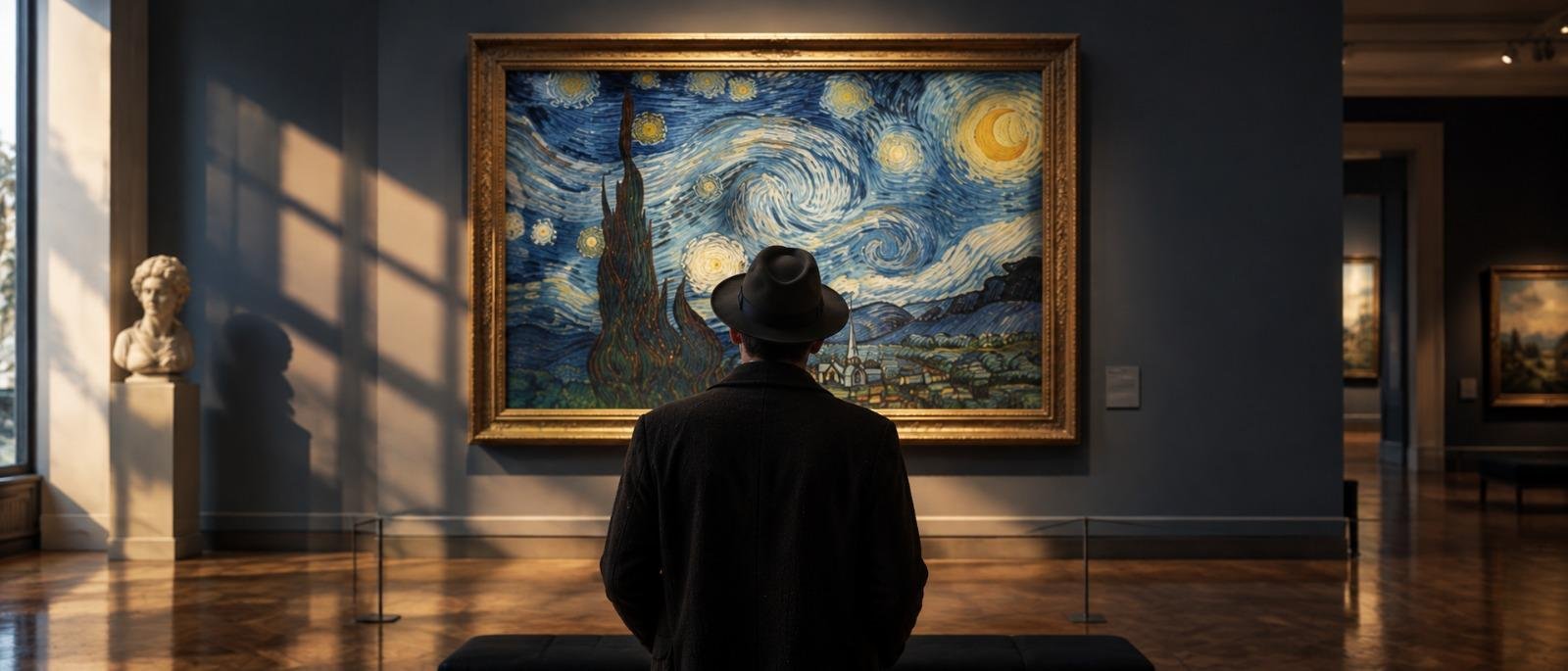
The Psychology of Art: How Does Aesthetic Experience Affect Human Thought and Emotion?
Art serves a role in human life that extends beyond aesthetic pleasure and entertainment. Music, literature, theater, visual arts, and other forms of artistic expression can influence emotional experiences, self-reflection, and the way people perceive the world. Contemporary research in neuroaesthetics explores the psychological and neural processes underlying these experiences.
What Psychological Processes Underlie Aesthetic Experience?
When people encounter a work of art, they do not simply process the information they see or hear. Emotions, prior knowledge, personal memories, and cultural background also contribute to the experience created by the artwork.
According to the “aesthetic triad” model proposed by Chatterjee and Vartanian, aesthetic experiences emerge through interactions among three systems: the sensorimotor system, which processes sensory features; the emotion–valuation system, which is associated with emotional responses and the experience of pleasure; and the knowledge–meaning system, which allows individuals to interpret and assign meaning to an artwork based on their personal knowledge and experiences.
This framework helps explain why the same artwork can evoke completely different responses in different people.
Why Doesn’t the Same Artwork Create the Same Impression in Everyone?
The perception of art is influenced substantially by an individual’s personal and cultural experiences. People’s interests in art, capacity for empathy, upbringing, and previous experiences can all shape their aesthetic responses.
For example, someone who has been familiar with certain visual symbols since childhood may perceive meanings in an artwork that another person does not notice. For this reason, there is no universal and unchanging “correct response” to a work of art.
When Does Aesthetic Experience Become a Personal Turning Point?
Some encounters with art go beyond creating pleasure and can lead people to reconsider certain beliefs or ways of thinking. Researchers have examined such experiences as transformative aesthetic experiences.
This kind of change may be relatively subtle, such as discovering a new idea or meaning. More powerful experiences, however, may lead individuals to question aspects of their previous worldview. Interestingly, such experiences do not necessarily involve only positive emotions; feelings of discomfort and inner conflict may also occur.
Why Is Art Important for Self-Reflection and Creativity?
Some aesthetic experiences may shift a person’s attention from external stimuli toward their internal thoughts. In particular, artworks that feel personally relevant or meaningful can evoke stronger emotional responses. Research suggests that engagement with visual art can activate the brain’s default mode network, which is associated with processes related to self-referential thought and reflection.
This process has also been linked to creativity. Some findings suggest that exposure to aesthetically engaging works of art may place individuals in a psychological state that is more conducive to creative thinking.
The Psychological Impact of Art Extends from Individual Experience to Social Connection
The potential impact of art is not limited to an individual’s inner world. Viewing artworks together and discussing them with others may also strengthen social connectedness. A 2025 study observed that museum visitors who viewed and discussed artworks together reported higher levels of well-being and social connectedness.
Some research has also examined the relationship between art and empathy. For example, literary works may help readers develop a deeper understanding of the experiences of different social groups, and in some cases, these effects may persist over time.
There Is No “Correct” Response to Art
One of the important points in understanding the psychological impact of art is that people do not necessarily respond to the same artwork in the same way. A particular work may evoke a strong emotional response in one person while producing little or no notable emotional reaction in another.
This difference does not indicate a failure to understand or appreciate art. Rather, it is a natural consequence of the personal nature of aesthetic experience. Researchers likewise emphasize that people can respond to art in diverse ways and that there is no single “correct” response.
Art is an experience shaped by the complex interaction of emotional and cognitive processes. Seeing a work of art or hearing a piece of music is only the initial stage; the meaning assigned to it is shaped by an individual’s personal experiences, knowledge, emotions, and cultural context.
Research in neuroaesthetics suggests that aesthetic experiences involve more than pleasure alone. They also provide an important area for understanding self-reflection, creativity, emotional experience, and social connection.