


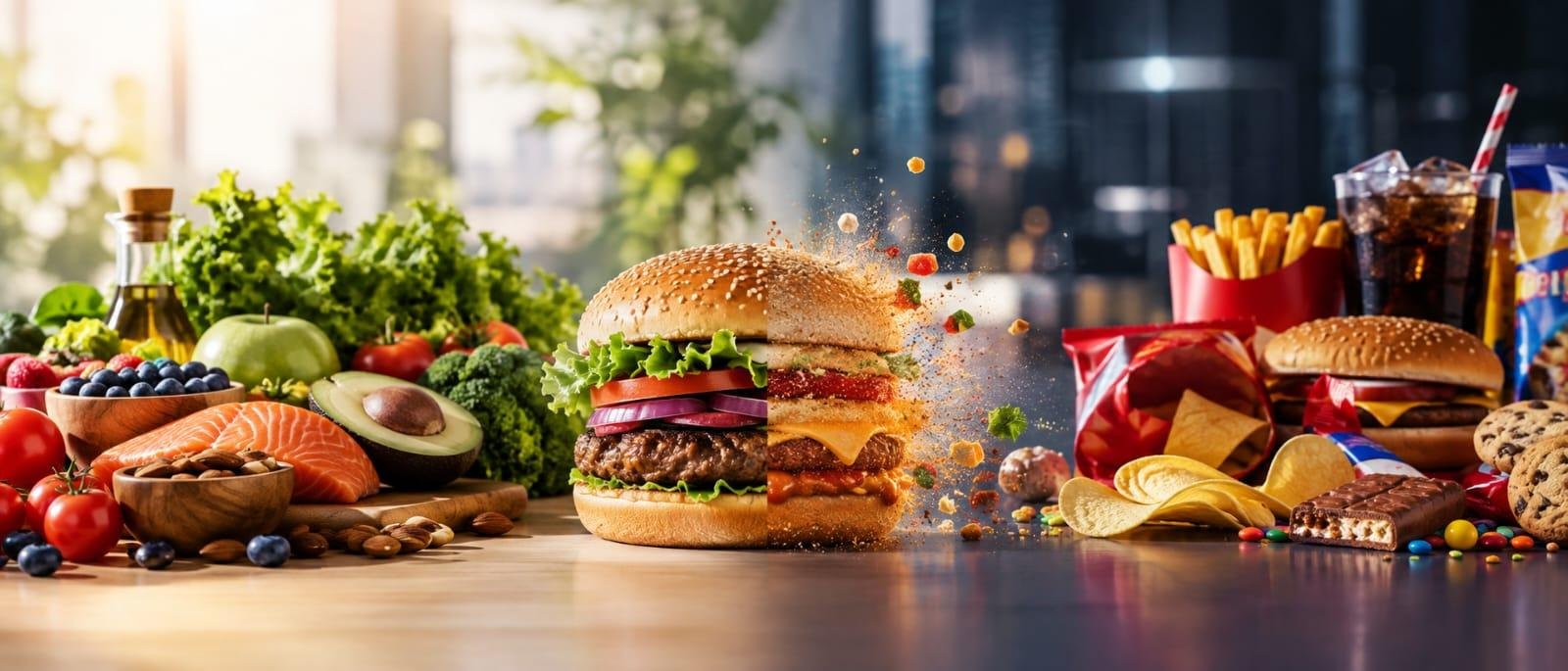
Can Ultra-Processed Foods Be Addictive? Understanding the Boundary Between Food and Addiction
Chocolate, chips, sugary drinks, and other highly processed products are often described casually as foods that people “cannot stop eating.” Sometimes this simply reflects a strong preference for a particular food. In other cases, however, intense cravings and difficulty controlling consumption may point to a more complex pattern of behavior.
One of the questions receiving increasing attention in psychology and neuroscience is whether certain foods can activate mechanisms that resemble those involved in addiction.
Research in this area suggests that some characteristics of ultra-processed foods may contribute to compulsive and difficult-to-control eating in some individuals. At the same time, the concept of “food addiction” remains the subject of ongoing scientific debate and does not mean that all foods are addictive.
Is It Simply Overeating or an Addictive Pattern?
Enjoying a highly palatable food or occasionally eating more than intended does not, by itself, constitute addiction. In an addiction model, the central issue is not simply how pleasurable the food is, but whether control over the behavior becomes impaired.
Problematic eating may involve several features occurring together: difficulty controlling food intake, intense and repeated cravings, continuing to consume a food despite negative physical or emotional consequences, persistent preoccupation with food, and impairment in areas such as health, work, or social relationships.
This distinction is important. Eating a favorite dessert is fundamentally different from experiencing a compulsive relationship with food that is difficult to control.
What Makes Ultra-Processed Foods Different?
“Processed food” and “ultra-processed food” are not synonymous. Ultra-processed products are generally manufactured industrially and may contain a range of additives, ingredients, and highly refined components that are rarely used in conventional home cooking.
These products include many packaged snacks, sweetened products, ready-to-eat meals, and other industrially formulated foods.
One characteristic that has received particular attention is the combination of refined carbohydrates and added fats at high levels. The texture, flavor, fat and carbohydrate content, salt, and other sensory properties of these products may work together to create a highly rewarding eating experience.
The issue is therefore not as simple as saying that “sugar is addictive” or that “fat is addictive.” The discussion focuses more broadly on how food is formulated, how its ingredients are combined, and how rapidly those nutrients are delivered to the body.
What Role Does the Brain’s Reward System Play?
Eating is not simply a physiological response to hunger. Food also interacts with the brain’s reward and motivational systems.
Palatable foods can activate neurobiological processes associated with reward. Dopamine, in particular, plays an important role in motivation, reinforcement, and reward learning.
In problematic eating, the issue may extend beyond the pleasure produced by food itself. Certain tastes, smells, packaging, advertisements, times of day, or emotional states can become cues associated with eating and may later trigger strong cravings.
As a result, a person may experience a powerful desire for a particular food even when they are not physically hungry.
Is Food Addiction the Same as Other Addictions?
Not exactly. Alcohol, nicotine, and other addictive substances involve specific psychoactive compounds and distinct pharmacological mechanisms. Food, by contrast, is biologically necessary, and eliminating food entirely from our lives is impossible.
This makes the application of an addiction framework to eating considerably more complex. One of the central questions in the scientific debate is whether the addictive potential lies primarily in the food itself or in particular patterns of eating behavior.
Some researchers argue that the specific formulation of ultra-processed foods may increase their potential to produce addictive-like responses. Others argue that eating is too biologically and behaviorally complex to be explained through the presence of a single addictive substance.
For this reason, although food addiction has become an important area of scientific research, it is not yet a fully settled scientific concept.
Who May Be More Vulnerable?
Research suggests that some individuals may be more susceptible than others to developing strong and compulsive responses to ultra-processed foods.
Potential risk factors include a family history of problematic alcohol or substance use, difficulties with emotional regulation, experiences of trauma, and vulnerability to other addictive behaviors.
A family history of addiction has been associated with increased vulnerability to problematic eating in some studies. Similarly, when people repeatedly use food to manage stress, anxiety, sadness, or other emotional states, eating can gradually become a means of regulating emotions.
Some research has also identified associations between problematic eating patterns and alcohol use, smoking, and vaping.
None of these factors means that a person will necessarily develop food addiction. They are better understood as factors that may increase vulnerability.
Why Can Cutting Back Be Difficult?
Some people who attempt to reduce their intake of ultra-processed foods report intense cravings, irritability, anxiety, difficulty concentrating, and lower mood, particularly during the early stages of dietary change.
Preliminary research suggests that these experiences may be especially intense during the first few days after reducing consumption.
However, these experiences should not automatically be equated with the physiological withdrawal associated with nicotine or other addictive substances. The nature and mechanisms of withdrawal-like symptoms related to food still require further experimental research.
Part of the difficulty may also arise from learned behavioral patterns. If a person has become accustomed to eating a particular food not only when hungry but also when stressed, tired, bored, or in certain social situations, reducing that food also means changing an established behavioral cycle.
Is Food Addiction Different From Eating Disorders?
Food addiction and eating disorders may share certain characteristics, but they are not the same diagnosis.
For example, loss of control and intense food cravings can occur in bulimia nervosa and binge-eating disorder. However, the concept of food addiction does not completely overlap with either condition.
Research suggests that not everyone who displays clinically significant addictive-like eating patterns meets the diagnostic criteria for binge-eating disorder or bulimia nervosa.
This distinction is important because some problematic eating behaviors may not fit neatly within existing eating-disorder categories.
At the same time, whether food addiction should eventually be recognized as a separate clinical diagnosis remains a matter of scientific discussion.
What Should Parents Do About Food?
Finding a balance between strict restriction and complete freedom can be difficult when it comes to children's diets.
On one hand, allowing ultra-processed products to become a dominant part of a child's everyday diet is not generally considered a desirable approach. On the other hand, making particular foods completely forbidden within the family may increase their appeal.
Because long-term research in this area is still limited, there is no single strategy that can be considered appropriate for every family.
A more practical approach is to make minimally processed and nutritious foods the foundation of everyday eating while ensuring that highly processed products do not become the dominant part of the diet.
The goal is not necessarily to divide foods into “good” and “bad” categories, but to consider the overall structure and quality of a person's eating pattern.
Can Eating Behavior Be Explained by Willpower Alone?
Another important question concerns the role of individual choice. What a person eats is certainly influenced by personal decisions, but those decisions occur within an environment that can also shape behavior.
Ultra-processed products are widely available, heavily marketed, and promoted through strategies that can specifically reach children and adolescents.
For this reason, describing problematic eating solely as a failure of self-control or a lack of willpower can overlook important psychological and social factors.
At the same time, this does not mean that responsibility should be placed entirely on the food industry. Eating behavior develops through the interaction of biological characteristics, psychological processes, family environments, social conditions, and the broader food environment.
Treatment and Intervention
There is not yet a standardized and fully established treatment model specifically for food addiction. However, some approaches used in the treatment of addictive and compulsive behaviors are also being explored in relation to problematic eating.
One important approach involves identifying triggers and emotional states. Recognizing that a craving tends to emerge at a particular time of day, after a stressful situation, or in response to a specific environmental cue may help increase awareness and behavioral control.
Another approach focuses on developing alternative strategies for regulating emotions rather than relying on food.
Regular and balanced eating may also be important. Intense hunger can increase sensitivity to highly rewarding food cues. Maintaining adequate and consistent nutrition may therefore help some people reduce impulsive eating.
Certain medications are also being studied in relation to binge eating and problematic eating behaviors. However, medication should only be considered following appropriate clinical assessment and under the guidance of a qualified physician.
The Question Is More Complex Than “Is Food Addictive?”
The possibility that ultra-processed foods may have addictive potential has become an important area of scientific research. Current evidence suggests that some people may experience intense cravings, loss of control, and continued consumption despite negative consequences in relation to certain highly processed foods.
However, this does not mean that all ultra-processed foods are addictive for everyone. Nor has it been established that food addiction operates through exactly the same clinical mechanisms as substance addiction.
An important direction for future research is therefore not simply determining how much people eat, but understanding which characteristics of certain foods may make some individuals more vulnerable to compulsive eating.
Understanding our relationship with food requires more than looking at willpower or calorie intake alone. The brain's reward system, emotional regulation, learned behaviors, individual vulnerabilities, and the surrounding food environment can all contribute to how eating behavior develops and is maintained.